Table of Contents
OpenSea - NFT Marketplace | Trade Digital Collectibles Free
Discover, trade, and create NFTs on OpenSea, the world's largest NFT marketplace. Buy, sell, and explore digital collectibles, art, music, and more. Start trading today!
Crypto CoinBlockchainCrypto Directory
Directory Categories
Explore in:Nft Market
What is OpenSea?
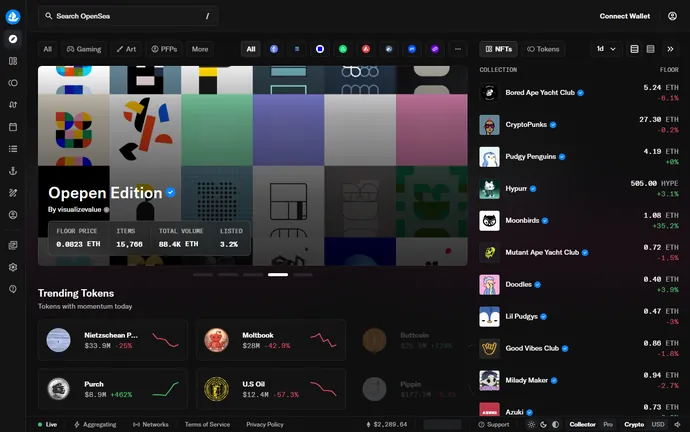
OpenSea stands as the world's leading NFT marketplace, revolutionizing how people buy, sell, and discover digital assets. As a pioneering platform in the blockchain space, OpenSea enables users to trade everything from digital art and collectibles to virtual real estate and domain names. Whether you're an artist looking to monetize your creations or a collector seeking unique digital items, OpenSea provides the infrastructure to make peer-to-peer NFT trading accessible to everyone. This OpenSea AI-powered platform combines cutting-edge blockchain technology with an intuitive interface, making it the go-to destination for both newcomers and experienced crypto enthusiasts exploring the NFT ecosystem.
How to Use OpenSea
Getting started with OpenSea is straightforward and user-friendly. First, you'll need to connect a cryptocurrency wallet like MetaMask to your account, which enables secure transactions and asset management. Once connected, you can immediately explore thousands of NFT collections across various categories including art, gaming items, photography, and music. The platform's advanced search and filtering tools help you discover specific collections or artists that match your interests. When you find something you want to purchase, simply place a bid or buy at the listed price using cryptocurrency. For creators, OpenSea makes minting (creating) NFTs incredibly simple—just upload your digital file, add details like name and description, set your price (either fixed or auction), and list it for sale on the marketplace.
For more comprehensive crypto coin information, visit our explore blockchain navigation page to discover additional blockchain navigation resources and crypto tools.
Key Features of OpenSea
- Multi-Blockchain Support: OpenSea operates across several blockchain networks, letting you choose between Ethereum's robust ecosystem, Polygon's low fees, or other supported chains based on your needs and budget.
- Lazy Minting: This innovative feature lets creators mint NFTs without upfront gas fees—the item is only minted when it sells, significantly reducing the barrier to entry for new artists and creators.
- Advanced Search & Discovery: With powerful filtering options by price, category, rarity, and collection traits, finding exactly what you want among millions of items becomes manageable and efficient.
- Creator Royalties: OpenSea automatically ensures creators earn a percentage (typically 2.5-10%) on all future resales of their NFTs, providing ongoing passive income from their work.
- Security & Escrow: The platform uses smart contracts to hold items in escrow during transactions, protecting both buyers and sellers from fraud and ensuring safe, transparent trades.
Each feature is designed to address specific pain points in the NFT market—whether it's reducing costs for creators, enhancing discoverability for collectors, or ensuring trust and security in every transaction.
Why Choose OpenSea?
OpenSea dominates the NFT marketplace landscape for good reason. As the first and largest marketplace of its kind, it offers unparalleled liquidity—meaning items listed here are more likely to find buyers quickly than on smaller platforms. The sheer volume of collections and users creates network effects that benefit everyone: more buyers attract more sellers, which in turn attracts more buyers, creating a vibrant ecosystem. For creators, OpenSea provides exposure to millions of potential collectors worldwide, while buyers gain access to the most diverse selection of digital assets anywhere in the crypto space.
Explore our crypto directory hub to access a complete collection of crypto coin platforms and blockchain navigation services.
Use Cases and Applications
Digital artists use OpenSea to reach global audiences without traditional gallery gatekeepers, selling their work directly to collectors who value their unique vision. Musicians and content creators leverage the platform to release limited edition albums, videos, and exclusive experiences as NFTs, creating new revenue streams in the process. Game developers utilize OpenSea to create in-game asset marketplaces where players can truly own, trade, and sell their virtual items across different games and platforms.
Brands and companies are increasingly adopting OpenSea for marketing campaigns, releasing branded digital collectibles that engage fans and create communities. Even charitable organizations have found innovative uses, auctioning one-of-a-kind digital items as NFTs to raise funds for causes. Meanwhile, investors and speculators analyze market trends on OpenSea to identify promising collections early, potentially earning significant returns through strategic trading. Discover more innovative tools and platforms like OpenSea on aitop-tools.com, your trusted resource for cutting-edge digital solutions.
Frequently Asked Questions About OpenSea
What is OpenSea and how does it work?
OpenSea is the world's largest NFT marketplace where users can buy, sell, and create digital assets powered by blockchain technology. The platform connects buyers and sellers directly, using smart contracts to facilitate secure transactions. Users can explore millions of NFTs across categories like art, gaming, music, and collectibles. To use OpenSea, you simply connect a crypto wallet (like MetaMask), browse the marketplace, and make purchases using cryptocurrency. Creators can mint their own NFTs by uploading digital files and listing them for sale. The platform supports multiple blockchains including Ethereum and Polygon, giving users flexibility in transaction costs and speed.
Is OpenSea safe to use and buy from?
OpenSea is generally considered safe as it employs several security measures to protect users. The platform uses smart contracts that hold NFTs in escrow during transactions, preventing scams where sellers take payment without delivering items. OpenSea also verifies popular collections with blue checkmarks, helping users identify authentic projects and avoid counterfeit copies. However, users should still exercise caution: never share your wallet's private keys, be wary of phishing attempts in messages or emails, and carefully verify collection authenticity before making purchases. While OpenSea provides infrastructure for secure trading, the decentralized nature of NFTs means some risk always exists in crypto transactions.
What cryptocurrencies can I use on OpenSea?
OpenSea supports multiple cryptocurrencies depending on which blockchain network you're using. On the Ethereum network, you'll need ETH (Ether) for purchases and to pay gas fees. For the Polygon network, you'll use MATIC tokens, which offer significantly lower transaction fees. The platform also supports other networks like Klaytn (using KLAY) and Solana (using SOL). When you first connect your wallet, OpenSea will guide you through adding the appropriate cryptocurrency for your chosen network. Many users prefer Polygon for everyday trading due to lower fees, while Ethereum is often used for higher-value transactions. You can purchase crypto through exchanges like Coinbase and then transfer it to your wallet.
How much does it cost to sell on OpenSea?
The cost of selling on OpenSea consists of several components. First, there's a gas fee (network transaction fee) to initialize your account and approve items for sale—this is a one-time fee per collection. OpenSea takes a 2.5% service fee on every successful transaction, which is deducted from the final sale price. Buyers also pay gas fees when completing purchases, though sellers can choose to bundle multiple items to reduce overall costs. The platform offers "lazy minting," which lets you list NFTs without paying upfront gas fees—the item is only minted to the blockchain when someone buys it, shifting the gas cost to the buyer. On Polygon, these fees are typically less than $1, while Ethereum fees can range from $5 to $100+ depending on network congestion.
Can I create and sell my own NFTs on OpenSea?
Absolutely! OpenSea makes it easy for anyone to create (mint) and sell their own NFTs, regardless of artistic background. To get started, connect your wallet and click the "Create" button. You can upload images, videos, audio files, or 3D models as your NFT content. Fill in details like the item's name, description, and optional properties (traits that make your NFT unique). Choose between a fixed price or timed auction format, set your price, and list it for sale. You can also create entire collections to organize multiple related items. OpenSea's lazy minting feature means you don't pay gas fees upfront—the item is minted only when sold. You can even set royalty percentages (typically 5-10%) so you earn money every time your NFT resells in the future.
What are gas fees and how do I reduce them on OpenSea?
Gas fees are payments required to process transactions on a blockchain network, paid to network validators who secure and verify transactions. On OpenSea, you'll encounter gas fees when minting NFTs, listing items, making purchases, or accepting offers. Ethereum gas fees can fluctuate dramatically from $5 to $200+ depending on network congestion. To reduce costs, many users switch to Polygon (MATIC), where fees are typically under $1. Other strategies include batching multiple actions into single transactions, timing transactions during low-traffic periods (weekends or late nights), and using lazy minting which defers gas fees until sale. OpenSea displays estimated gas fees before you confirm transactions, so you always know the cost upfront.
How do I connect a wallet to OpenSea?
Connecting a wallet to OpenSea is a simple process that takes just a few minutes. The most popular wallet is MetaMask, available as a browser extension and mobile app. First, install your preferred wallet and create or import your existing wallet address. Then visit OpenSea.io and click the wallet icon in the top-right corner. Select your wallet type from the list, and your wallet will prompt you to sign a message to verify connection (this doesn't cost anything or give OpenSea access to your funds). Once connected, your wallet address appears in the top-right corner, and you can start browsing, buying, and selling. Other supported wallets include Coinbase Wallet, WalletConnect, Fortmatic, and Trust Wallet. Always ensure you're on the official OpenSea website before connecting your wallet.
What types of NFTs can I find on OpenSea?
OpenSea hosts an incredibly diverse range of NFT categories. In Art, you'll find everything from generative algorithm art to hand-crafted digital paintings. Collectibles include popular profile picture projects like Bored Ape Yacht Club and CryptoPunks. Gaming items encompass in-game assets, characters, and virtual land from blockchain-based games. Music NFTs feature albums, singles, and audiovisual experiences tokenized by artists. Photography NFTs showcase both professional and amateur photographers' work. Virtual Worlds include land and property in metaverse platforms like Decentraland and Sandbox. You'll also find domain names (ENS names), sports collectibles, trading cards, and even digital fashion items. New categories emerge regularly as creators innovate, making OpenSea a constantly evolving marketplace.
How do I know if an NFT collection is legitimate?
Verifying NFT authenticity is crucial due to the prevalence of copycat collections. First, check if the collection has a blue checkmark next to its name on OpenSea—this indicates it's been verified by the platform as authentic. Examine the collection's official website and social media accounts (linked in the collection description) to ensure they match the claimed project. Be cautious of collections with misspellings of popular project names or suspiciously low prices for supposedly valuable items. Check the collection's trading volume and number of owners—legitimate popular projects typically have high activity. Look at the creator's wallet address and see if they've created other legitimate projects. Finally, join the project's official Discord or Telegram community to ask questions and verify with other community members. If something seems too good to be true, it probably is.
Can I use OpenSea without coding knowledge?
Yes, OpenSea is designed to be completely accessible to users without any coding or technical background. For buyers, the process is as simple as browsing and shopping on any e-commerce site—just connect your wallet, find items you like, and purchase them. For creators, OpenSea's minting interface handles all the technical blockchain interactions behind the scenes. You simply upload your file (image, video, audio), fill in information fields like title and description, set your price, and click list. The platform generates the smart contract code and handles blockchain integration automatically. While understanding blockchain basics can be helpful, it's not required to use OpenSea effectively. The platform's user-friendly interface and extensive help documentation make NFT trading accessible to everyone, regardless of technical expertise.
What is lazy minting and how does it work?
Lazy minting is OpenSea's innovative feature that allows creators to list NFTs without paying upfront gas fees to mint them to the blockchain. Traditionally, minting an NFT requires paying gas fees (which can be $20-200+ on Ethereum) before the item can be listed. With lazy minting, your item exists off-chain initially and only gets minted to the blockchain when someone purchases it. The buyer pays the gas fee as part of the transaction. This dramatically lowers the barrier to entry for creators who want to test the market without investing in gas fees for unsold items. Lazy minting is particularly valuable for new artists, those creating large collections, or anyone trading on high-fee networks like Ethereum. You can enable lazy minting during the item creation process on OpenSea.
How do royalties work for creators on OpenSea?
Creator royalties on OpenSea ensure that artists earn ongoing income from their work even after the initial sale. When you create an NFT, you can set a royalty percentage (typically between 2.5% and 10%) that you'll receive on all future secondary market sales. This means if someone buys your NFT and later resells it for a higher price, you automatically receive that percentage of the resale price. OpenSea's smart contracts automatically handle royalty payments, sending funds directly to your wallet with each resale. This creates sustainable passive income streams for creators and is considered one of the most revolutionary aspects of NFTs compared to traditional art markets, where artists typically don't benefit from secondary market appreciation. The royalty setting applies to all future resales across OpenSea and other platforms that support creator royalties.
Can I cancel an offer or listing on OpenSea?
Yes, you can cancel both offers you've made and items you've listed for sale on OpenSea. To cancel a listing you've created, go to your profile, click on the "Listed" tab to see items you're currently selling, select the item you want to unlist, and choose the cancel option. Note that canceling a listing requires a gas fee transaction on the blockchain (except on Polygon where fees are minimal). For offers you've placed on other items, go to the "Offers" section in your activity feed, find the offer you want to cancel, and click cancel. Keep in mind that once someone accepts your offer, the transaction is final and can't be reversed. Similarly, if you've already accepted someone else's offer on your item, that sale is complete. Always double-check listings and offers before finalizing them, as reversing completed transactions isn't possible on the blockchain.
What's the difference between Ethereum and Polygon on OpenSea?
Ethereum and Polygon are two different blockchain networks supported by OpenSea, each with distinct advantages. Ethereum is the original and most established NFT blockchain, offering the highest trading volume and collector interest. However, Ethereum gas fees can be expensive ($20-200+ depending on network congestion). Polygon is a layer-2 solution built on Ethereum that offers dramatically lower transaction fees (typically under $1) and faster confirmation times. Many users prefer Polygon for frequent trading, buying lower-priced items, or minting multiple NFTs. However, Polygon generally has lower trading volume and fewer premium collections than Ethereum. You can switch between networks on OpenSea by selecting the network dropdown. Some collections exist on only one network, while others are bridged across both. Choose Ethereum for high-value transactions or maximum exposure, Polygon for lower costs and speed.
Need more crypto resources? Check out our bitcoin tools collection for bitcoin tools and additional crypto coin services in our crypto directory.