Table of Contents
Aave - DeFi Lending Protocol | Earn & Borrow Crypto
Aave is an open-source DeFi protocol for decentralized lending and borrowing. Earn interest on crypto deposits or borrow with variable/stable rates. Start today!
Crypto CoinBlockchainCrypto Directory
Directory Categories
Explore in:Popular Sites
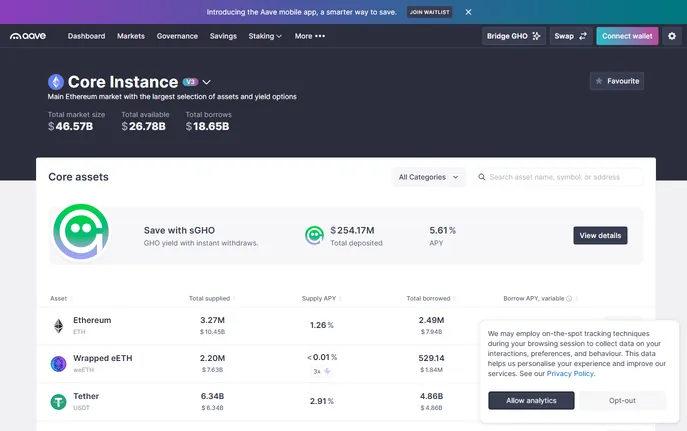
What is Aave?
Aave is a pioneering decentralized finance (DeFi) protocol that revolutionizes how users interact with cryptocurrency lending and borrowing. As an open-source, non-custodial liquidity market, Aave allows you to earn interest on crypto deposits or borrow assets using your holdings as collateral—all without intermediaries. Whether you're a crypto enthusiast looking to maximize returns or a developer seeking seamless integration, Aave delivers transparency, security, and flexibility that traditional finance simply can't match.
How to Use Aave
Getting started with Aave is straightforward. First, connect your Web3 wallet like MetaMask or WalletConnect to the Aave platform. Browse the available markets across multiple blockchain networks including Ethereum, Polygon, and Avalanche. To supply liquidity, select an asset and deposit it into the protocol—you'll immediately start earning interest. For borrowing, choose your collateral, select the asset you want to borrow, and pick between variable or stable interest rates based on your risk preference.
For more comprehensive crypto coin information, visit our explore blockchain navigation page to discover additional blockchain navigation resources and crypto tools.
Key Features of Aave
- Dual Interest Rate Model: Choose between stable rates for predictable payments or variable rates that adjust with market conditions. This flexibility empowers you to optimize borrowing costs based on your financial strategy and risk tolerance.
- Flash Loans Innovation: Execute uncollateralized loans that must be repaid within a single transaction block. This groundbreaking feature enables sophisticated DeFi strategies, arbitrage opportunities, and protocol interactions previously impossible in traditional finance.
- Multi-Chain Deployment: Access Aave across Ethereum, Polygon, Avalanche, Arbitrum, Optimism, and more. This cross-chain presence reduces gas fees, increases scalability, and gives you freedom to choose the network that best fits your needs.
- Risk Management System: Benefit from advanced liquidation mechanisms, isolation mode for new assets, and efficiency mode (eMode) for correlated assets. These safety features protect both lenders and borrowers while maintaining protocol solvency.
- Governance Token (AAVE): Participate in protocol governance, earn staking rewards through the Safety Module, and benefit from fee discounts. Token holders shape Aave's future through decentralized voting on upgrades and parameters.
Why Choose Aave?
Aave stands as the industry-leading DeFi lending protocol, trusted by billions in total value locked and utilized by thousands of users worldwide. Its battle-tested smart contracts have undergone rigorous audits, while the protocol's innovative features continually push DeFi boundaries. Unlike centralized platforms, Aave ensures you maintain complete custody of your assets—no KYC, no withdrawal limits, no permission required. The protocol's transparent on-chain operations mean every transaction is verifiable, building trust through code rather than institutions.
For developers, Aave offers comprehensive documentation, robust APIs, and developer grants that make integration seamless. The protocol's modular architecture supports everything from simple wallet integrations to complex DeFi composability. Whether you're building the next DeFi application or simply seeking better yields on your crypto holdings, Aave provides the infrastructure, liquidity, and reliability you need to succeed in decentralized finance.
Use Cases and Applications
Retail investors use Aave to earn passive income by supplying stablecoins like USDC or DAI, often achieving yields significantly higher than traditional savings accounts. Borrowers leverage their long-term crypto holdings as collateral to access liquidity without triggering taxable events, maintaining exposure to potential appreciation while accessing funds for immediate needs.
Explore our crypto directory hub to access a complete collection of crypto coin platforms and blockchain navigation services.
Frequently Asked Questions About Aave
Is Aave safe to use for lending and borrowing?
Aave is one of the most secure DeFi protocols, with smart contracts audited by leading security firms including Trail of Bits, OpenZeppelin, and Consensys Diligence. The protocol has operated since 2020 with billions in TVL and maintains a Safety Module where AAVE tokens are staked to provide additional security. However, as with all DeFi protocols, smart contract risks exist, so never invest more than you can afford to lose.
How does Aave calculate interest rates?
Aave uses an algorithmic interest rate model based on supply and demand. When utilization of an asset is low, interest rates decrease to encourage borrowing. As utilization increases, rates rise to incentivize more suppliers. Variable rates adjust continuously, while stable rates remain fixed for longer periods but can be rebalanced if market conditions change significantly.
What is the difference between stable and variable rates on Aave?
Variable rates fluctuate based on real-time supply and demand, offering potentially lower costs when markets are favorable but less predictability. Stable rates remain mostly constant, providing payment certainty ideal for budgeting and long-term planning. You can switch between rate types at any time, though stable rates are typically higher to compensate for the reduced volatility risk.
Can I lose my deposited funds on Aave?
Your supplied assets earn interest continuously and can be withdrawn anytime, provided there's sufficient liquidity. The primary risk is smart contract vulnerability, though Aave's extensive audits minimize this. If you're borrowing, your collateral can be liquidated if your health factor drops below 1.0 due to collateral value decreasing or debt value increasing. Always monitor your positions and maintain adequate collateralization.
What are flash loans and how do they work?
Flash loans are uncollateralized loans that must be borrowed and repaid within a single blockchain transaction. If the loan isn't repaid by the transaction's end, the entire transaction reverts as if it never happened. This enables advanced strategies like arbitrage, collateral swapping, and self-liquidation without requiring upfront capital. They're primarily used by developers and sophisticated traders.
Which cryptocurrencies does Aave support?
Aave supports a wide range of assets including major cryptocurrencies like ETH, WBTC, USDC, USDT, DAI, and many others. The exact assets available vary by network—Ethereum mainnet offers the most options, while other chains like Polygon and Avalanche have curated selections optimized for those ecosystems. New assets are added through governance votes by AAVE token holders.
How do I avoid liquidation on Aave?
Monitor your health factor, which should stay well above 1.0. Maintain conservative loan-to-value ratios, especially with volatile assets. Consider using stable rate borrowing for predictability, or supply additional collateral if your health factor approaches risky levels. You can also enable notifications through various DeFi dashboards that alert you when your position needs attention.
What fees does Aave charge?
Aave charges a small percentage of the interest paid by borrowers, which is distributed to suppliers and the protocol reserve. Flash loans have a 0.09% fee. There are no deposit or withdrawal fees, though you'll pay blockchain gas fees for transactions. The protocol is designed to be cost-efficient, with the majority of interest going directly to suppliers.
Can I use Aave from any country?
Aave is a decentralized protocol accessible to anyone with an internet connection and a Web3 wallet. There are no geographic restrictions or KYC requirements. However, users should be aware of their local regulations regarding cryptocurrency usage. Some jurisdictions may have restrictions on DeFi participation, so always ensure compliance with your local laws.
How does Aave governance work?
AAVE token holders can propose and vote on protocol changes including adding new assets, adjusting risk parameters, and upgrading smart contracts. The governance process involves discussion forums, snapshot polling for sentiment, and on-chain voting for implementation. This decentralized approach ensures the community shapes Aave's development rather than a central authority.
What is the AAVE token used for?
The AAVE token serves multiple purposes: governance voting rights, staking in the Safety Module to earn rewards while protecting the protocol, and potential fee discounts. Token holders essentially own a piece of the protocol's governance and benefit from its success through various incentive mechanisms.
How do I integrate Aave into my application?
Aave provides comprehensive developer documentation, SDKs, and APIs for easy integration. The protocol's smart contracts are open-source and well-documented, supporting direct contract interaction or SDK usage in JavaScript/TypeScript. Developers can access lending pools, implement flash loans, or build complex DeFi applications on top of Aave's liquidity infrastructure. Visit the Aave documentation portal for technical guides and code examples.
What blockchains does Aave support?
Aave operates across multiple blockchain networks including Ethereum (the original deployment), Polygon, Avalanche, Arbitrum, Optimism, Fantom, and Harmony. This multi-chain strategy reduces transaction costs and increases accessibility. Each deployment maintains the same core functionality while optimizing for the specific blockchain's characteristics and user base.
How does Aave compare to traditional banking?
Unlike traditional banks, Aave operates 24/7 without downtime, requires no credit checks or account approval, and provides transparent, algorithm-determined interest rates. You maintain full custody of your assets rather than depositing them with an institution. Interest rates on Aave often exceed traditional savings accounts, while borrowing can be faster and more flexible, though it requires crypto collateral rather than credit-based approval.
What is isolation mode on Aave?
Isolation mode is a risk management feature for newly listed or potentially risky assets. When an asset is in isolation mode, it can only be used as collateral in isolation—you cannot supply other assets as collateral simultaneously. This protects the protocol from excessive risk exposure while still allowing users to access borrowing against these assets with controlled debt ceilings.
Need more crypto resources? Check out our bitcoin tools collection for bitcoin tools and additional crypto coin services in our crypto directory.
Related Topics